
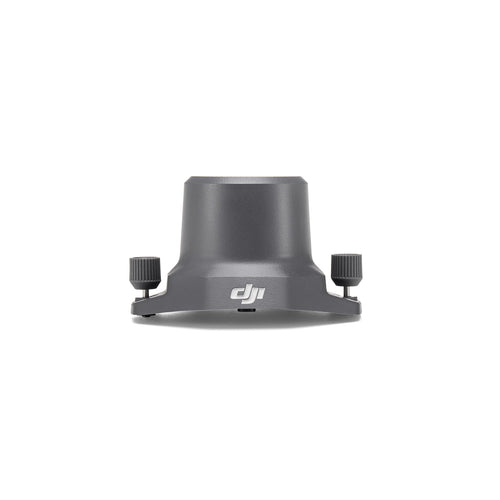





The training gear.
I know what your thinking, "that looks daft" believe me it will save you time and money to use this from the start up until you feel confident hovering your helicopter.
To put it together insert the one of the small rings (it may be small bits of rubber tubing) onto the end of the carbon fiber rods, then insert a ball, then another small ring, so it looks like this.
Repeat this until you have all four legs done, then insert the legs into the circular bit below.
Using the small tie wraps secure the training frame to the skids of the helicopter.
It should end up looking like this.
Next is a bit of maintenance that should increase the life of you heli and improve it's performance.
Silicone oil, grease or spray can be used to lube the belt, some people use furniture polish.
Just apply a small amount onto the tail area of the belt and turn the rotors by hand until the belt is covered with a fine layer, you don't need too much.
Apply it to the outside of the belt through the slot shown above and over the gear cog at the back shown below.
A little 3 in 1 oil can be used on metal to metal areas shown in these next three pictures.
Finally a little oil on the tail slider will help the operation of the tail.
Ok, ready to set up your helicopter ?
Another thing that will help you get a stable hover is a set of balanced blades, most RTF helicopters will have been balanced quickly before getting to you but it never hurts to check them.
When you remove a blade that has been marked with coloured tape, mark the blade grip so you can put the blade back in it's right holder.
A good set of tools will help you and prevent any damage caused but forcing the fixings etc.
A blade balancer can be used or you could make your own (check out the forums for ideas).
If the blades are balanced then pop them back into their respective blade grips and tighten them up so that they hold in position until you give then a light tap, they should fold back in the grip and not be solid.
If the blades are not balanced then you can balance them using bits of tape, appliying the tape to the lighter blade in a position where it balances out.
This coloured tape will help you set up the blade tracking later so a nice bright contrasting colour helps.
The set that came pre balanced with this Belt CP needed balancing but only by removing the tape from the heavier one.
Secure the helicopter battery with the Velcro tape supplied, thread it through the slot in the main frame (just behind the front skid)
This will stop the battery moving around in the frame too much.
The weight of the battery is used to balance the helicopter's centre of gravity along it's length.
Line the main blades up with the tail boom.
Place your fingers under the flybar and lift the helicopter up.
See how it tilts backwards without the battery inplace.
Once the battery in in place try it again and it should stay fairly level.
Adjust the battery position until it lifts up nice and flat.
The next thing we will look at is the mystical swash plate. ooooooooh!
This clever bit of kit allows the control of the helicopters direction.
Here viewed from the left hand side (nose facing left) quite level
With the right stick pushed forwards (elevator) the swashplate tilts forwards.
Right stick backwards (elevator) it tilts backwards.
These next shots are from the rear of the helicopter
Level-ish
Right stick to the left (aileron left) it dips to the left.
Right stick to the right (aileron right) it dips to the right.
Again right stick forwards
And right stick backwards
Part three will be delayed as the magic smoke just escaped from the ESC while setting up the tail!
The joys of heli's.
_________________
My RC stuff
my youtube


